Elite Sport Brief
Performance, briefly and precisely

Elite Sport Brief — Performance, briefly and precisely

Olympic Science

Marginal gains once the easy gains have already been taken

The approach that transformed several Olympic programmes has become a slogan detached from the conditions that made it work. Those conditions are more restrictive than the phrase suggests.

Vikram Singh··3 min read

Olympic Science

Tapering: why doing less produces more, and when it goes wrong

Reducing training before competition improves performance reliably enough to be near-universal in endurance sport. Understanding the mechanism explains why the common way of getting it wrong is so common.

Neha Gupta··3 min read

Youth Development

Why a growing skeleton behaves differently from an adult one

Bone in a young athlete is not simply a smaller version of adult bone. Its growth regions, its response to loading and its failure patterns are all distinct, which is why youth training is treated separately.

Sarah Williams··3 min read

Youth Development

Early specialisation and the case for a wider athletic base

Concentrating on a single sport young feels like the efficient route to expertise. The evidence on what it costs, and on what a broader background provides, points in a different direction.

Priya Patel··3 min read

FIFA

Why the hamstring dominates the football injury ledger

One muscle group accounts for a disproportionate share of time lost in football. The reason lies in what the hamstring is asked to do during sprinting rather than in any weakness of the tissue.

Neha Gupta··3 min read

ICC

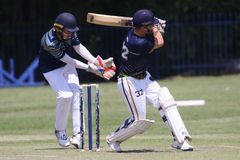
Wicketkeeping: the squat nobody counts as training load

A keeper performs hundreds of deep squats a day while carrying protective equipment and concentrating on every delivery. Almost none of it appears in the workload figures the sport collects.

Neha Gupta··3 min read

Nutrition & Diet

All nutrition & diet →

Nutrition & Diet

Sweat, thirst and why hydration guidance keeps being revised

Advice on drinking during sport has swung between extremes within a single generation. The underlying physiology has not changed, which suggests the problem was always in the generalisation.

Aarav Sharma··3 min read

Strength Training

All strength training →

Strength Training

Bar speed as a window into the state of a nervous system

Measuring how fast a load moves turns a training session into a daily readout of an athlete's condition. The idea is simple and the interpretation is where most of the difficulty lies.

Neha Gupta··3 min read

Strength Training

Why muscle behaves differently when it lengthens under load

A muscle resisting a stretch produces more force than one shortening, and it does so with less effort. That asymmetry sits underneath a large share of both athletic power and athletic injury.

Sarah Williams··3 min read

Mental Performance

All mental performance →

Mental Performance

Why motivation usually collapses before physical capacity does

Athletes carrying too much load rarely fail a fitness test first. The earliest changes appear in mood, appetite for training and tolerance of ordinary irritation, which is why they are so often misread.

Dr. Alex Mercer··3 min read

Mental Performance

Sleep is the most under-measured input in elite sport

Every serious programme tracks training load in detail and treats sleep as something that happens afterwards. The evidence on what sleep does to performance does not support that asymmetry.

Vikram Singh··3 min read

Youth Development

All youth development →

Youth Development

Why a growing skeleton behaves differently from an adult one

Bone in a young athlete is not simply a smaller version of adult bone. Its growth regions, its response to loading and its failure patterns are all distinct, which is why youth training is treated separately.

Sarah Williams··3 min read

Youth Development

Early specialisation and the case for a wider athletic base

Concentrating on a single sport young feels like the efficient route to expertise. The evidence on what it costs, and on what a broader background provides, points in a different direction.

Priya Patel··3 min read

Olympic Science

Marginal gains once the easy gains have already been taken

The approach that transformed several Olympic programmes has become a slogan detached from the conditions that made it work. Those conditions are more restrictive than the phrase suggests.

Vikram Singh··3 min read

Olympic Science

Tapering: why doing less produces more, and when it goes wrong

Reducing training before competition improves performance reliably enough to be near-universal in endurance sport. Understanding the mechanism explains why the common way of getting it wrong is so common.

Neha Gupta··3 min read