FIFA
Playing at altitude: what thinner air changes for a footballer
Altitude does not make a footballer weaker in any simple sense. It changes the oxygen available for the aerobic contribution, which reshapes how the match is paced from the opening minutes.
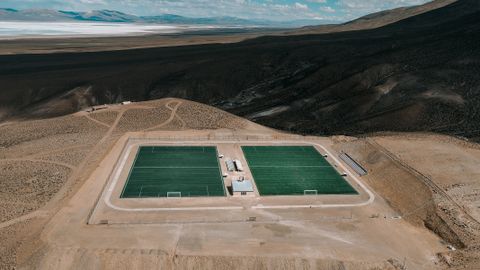
What actually changes in the air
The proportion of oxygen in the atmosphere is essentially unchanged at altitude; what falls is the pressure driving it into the blood. Lower pressure means less oxygen crosses into the bloodstream with each breath, so blood leaves the lungs carrying less than it would at sea level. The body compensates immediately by breathing harder and raising heart rate, which restores some of the delivery at a metabolic cost.
That compensation is why a player at altitude can feel considerable effort while producing a level of work that would be comfortable lower down. The effect grows with elevation, so a venue moderately above sea level differs greatly from one set high in a mountain range.
Which parts of the game are affected
Short maximal efforts rely on energy systems that do not depend on oxygen at the moment of use, so a single sprint is barely affected. What suffers is the recovery between efforts, because restoring the systems that fuel repeated sprints depends on aerobic metabolism.
A match at altitude therefore tends to show a similar peak speed but a reduced ability to repeat high intensity actions late on. Total distance covered typically falls, and the pattern of that reduction concentrates in the closing stages of each half.
Adaptation takes longer than a fixture window
The body responds to sustained altitude exposure with changes including increased production of the hormone that stimulates red cell formation. Those changes develop over weeks rather than days, which is longer than any normal international fixture window allows.
The immediate responses of breathing and heart rate arrive within hours and carry most of the compensation in a short visit. Squads therefore face a choice between arriving very shortly before kick-off or committing to a preparation period they usually cannot afford.
Who copes better and why
Players who live at altitude carry adaptations that visitors do not, which is the basis of the well established home advantage at such venues. Individual responses to altitude vary considerably even among players of similar fitness, and the variation is not well predicted in advance.
Aerobically stronger athletes sometimes show a larger relative decrement, because they have more aerobic contribution available to lose. Acute mountain sickness can affect anyone at sufficient elevation and is a medical matter requiring assessment rather than persistence.
The ball changes too
Thinner air exerts less drag, so a struck ball retains speed for longer and travels further than the same strike would at sea level. Reduced air resistance also reduces the sideways force generated by spin, so curved deliveries bend less than players expect. Goalkeepers face shots that arrive faster and dip less, which alters positioning judgements built up over years elsewhere.
These effects are purely mechanical and apply to both teams, though the visiting side has had less opportunity to recalibrate. Players who train regularly at altitude adjust their striking technique accordingly, which forms part of the familiarity advantage they hold.
Reading altitude fixtures sensibly
The physiological disadvantage for a visiting side is real, well described and largely unavoidable within a short preparation window. It is nonetheless one factor among many, and attributing the outcome of any particular fixture to elevation alone is unsound.
Governing bodies have periodically considered limits on the elevation at which matches may be staged, which is a policy question. For an individual player, symptoms beyond ordinary breathlessness at altitude are a reason to see the team doctor promptly.
- Oxygen pressure falls, not oxygen percentage
- Aerobic contribution is affected most
- The ball also behaves differently