Strength Training
Why muscle behaves differently when it lengthens under load
A muscle resisting a stretch produces more force than one shortening, and it does so with less effort. That asymmetry sits underneath a large share of both athletic power and athletic injury.
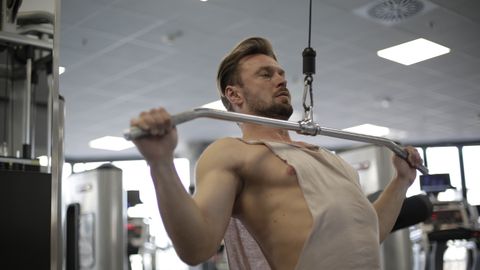
Three ways a muscle can work
A muscle can shorten while producing force, hold a position without changing length, or lengthen while resisting a load. The third case is the one where the muscle produces the highest force, and it does so at a lower metabolic cost. This is counterintuitive because the muscle is losing the contest with the external load while generating more tension than it could otherwise.
The pattern appears in ordinary movement constantly, since every landing, every deceleration and every descent involves it. Because it is so common, the demands it places on tissue accumulate without ever appearing as a distinct type of training.
Where the extra force comes from
Part of the explanation lies in the behaviour of the contractile machinery when it is forcibly stretched while engaged. Elastic structures within and around the muscle also contribute, storing energy as they are stretched and returning some of it. The tendon participates in this, behaving like a spring that can absorb and release energy across a movement.
The relative contribution of each element varies with the speed and the magnitude of the stretch involved. The lower metabolic cost arises because fewer active units are needed to resist a given force when the muscle is being lengthened.
Why it produces more soreness
Delayed soreness follows lengthening work far more than shortening work, and the difference is substantial. The mechanism appears to involve disruption at the microscopic level within fibres that were loaded while being stretched. Soreness peaks a day or two afterwards and resolves without correlating well with the extent of any underlying change.
A single exposure produces a protective effect against subsequent sessions, which is why the second session hurts considerably less. This protective effect is one of the more robust observations in exercise physiology and appears within days.
The connection to injury
Most non-contact muscle injuries occur during the lengthening phase of a movement rather than during shortening. The hamstring during late swing in sprinting is the most discussed example, though the pattern extends well beyond it. The forces involved are highest precisely when the muscle is near its longest working length, which narrows the margin available.
This is why preparation for sports involving high speed running attends specifically to the muscle's capacity in lengthened positions. Fatigue narrows that margin further, which is part of why these injuries cluster in the later stages of matches and sessions.
Why training it is treated carefully
Because lengthening work imposes high tension, it produces strong adaptive signals in both muscle and tendon. It also produces considerable soreness and fatigue, which affects the sessions that follow it in ways that must be planned around.
Introducing it too quickly to an athlete unaccustomed to it is a recognised way to generate an unnecessary problem. How and when to include it for a specific athlete is a decision for a qualified strength coach and, where relevant, medical staff.
What this changes about watching sport
The visually impressive part of an athletic movement is usually the shortening phase, which is not where the demand concentrates. Deceleration, landing and change of direction are where the tissue is worked hardest and where failures cluster.
Sports that involve repeated hard stopping therefore impose demands that measures of running volume alone do not capture. Tracking systems have increasingly begun recording decelerations alongside distance for exactly this reason, since the two describe different costs.
- Lengthening actions produce the highest forces
- Elastic elements contribute to the difference
- Soreness follows lengthening work particularly