ICC
Wicketkeeping: the squat nobody counts as training load
A keeper performs hundreds of deep squats a day while carrying protective equipment and concentrating on every delivery. Almost none of it appears in the workload figures the sport collects.
A workload that hides in plain sight
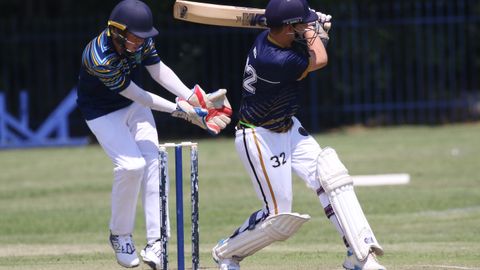
Cricket monitoring systems are built around bowling counts and running between wickets, which suits bowlers and batters reasonably well. A wicketkeeper does neither in significant volume yet performs a deep squat and rise for every delivery of a long day. Across a full day in the field that accumulates into a repetition count that would be considered substantial in any gym programme.
Because no established metric captures it, the keeper frequently appears in squad data as one of the least loaded players present. That absence matters most in the periods when a keeper is playing continuously across formats without any reduction in overs kept.
What the position asks of the hips
Holding a deep squat requires considerable range at the hip, and individual hip architecture varies enormously between people. Athletes whose hip shape limits deep flexion adopt compensations, commonly through the lower back or by turning the feet outward. Those compensations are sustainable in small doses and become significant when repeated across every delivery of a season.
Where hip or groin pain develops in a keeper, assessment by a clinician is warranted rather than adjustment of stance by trial and error. Hip structure is not something training changes, which is why the answer is usually accommodation rather than correction.
Standing up to the stumps changes everything
Keeping up to the stumps compresses the available reaction time to a fraction of what standing back allows. The keeper must also move laterally from a deep position without the run-up to a movement that a fielder would have. Deviation off the pitch adds unpredictability that cannot be anticipated from the bowler's action alone.
The combination of a constrained starting position and minimal warning is why keeping to spin is regarded as the harder discipline. Standing back trades that reaction problem for greater distance covered, so the physical cost simply moves rather than disappearing.
Equipment is part of the load
Pads, gloves and additional protection add mass that must be lifted with every rise from the squat position. That equipment also traps heat, which raises the thermal burden on a player who is on the field for the entire innings.
Gloves reduce tactile feedback, so the hands must work harder to control a ball they can feel less precisely. None of this is dramatic in isolation and all of it accumulates over the hours a keeper spends in position.
Attention is a physical cost
A keeper is the only fielder required to be fully engaged for every single delivery across a day's play. Sustained attention of that kind is metabolically real and produces fatigue that shows up in decision making and in movement.
Lapses in keeping tend to occur in the periods where attention has been held longest without a natural break. This is one reason the position is understood as a specialist role rather than something rotated casually through a side.
What better monitoring would look like
Simple counts of deliveries kept, split by whether the keeper stood up or back, would capture most of the missing volume. Wearable sensors can record squat repetitions directly, which removes the need to estimate from scorecards.
The benefit is not the number itself but the ability to notice when a keeper's load has risen sharply relative to their own history. Until something is counted, it is difficult to manage, and the keeper's workload has remained largely uncounted.
- Repeated deep squatting accumulates unrecorded load
- Hip and knee range determines position quality
- Concentration demand is a physical cost