Top
Why the same injury ends one career and barely interrupts another
Two athletes with an identical scan can follow entirely different paths. The variation sits in tissue quality, sport demands and the environment around the athlete rather than in the injury itself.
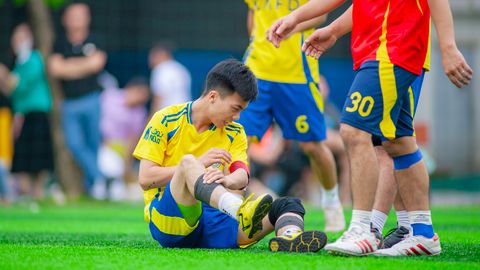
The scan is not the injury
An image records what tissue looks like at one moment, which is a far narrower thing than what an athlete can do with that tissue. Findings that would be considered abnormal in a scan are common in athletes who have no symptoms and are competing without limitation.
The reverse is equally common, with athletes whose imaging looks unremarkable but who cannot produce force in the position their sport demands. This is why interpreting an image without examining the athlete is regarded as poor practice by the clinicians who do it for a living.
The same deficit costs different amounts
A modest loss of ankle range matters enormously to a weightlifter catching a bar in a deep position and rather less to a distance runner. A shoulder that has lost the last few degrees of external rotation is a serious problem for a fast bowler and largely irrelevant to a cyclist.
Because sports load the body along different lines, the functional cost of an identical structural change varies widely between them. Position within a sport adds another layer, since a goalkeeper and a winger are effectively playing different sports with the same ball.
Tissue does not start from the same place
Two athletes of the same age can have very different training histories, and connective tissue carries the memory of that history. Someone with years of gradual loading behind them tends to have tissue that tolerates the demands of rehabilitation more comfortably.
Prior injury to the same region changes the local mechanics and the way the athlete organises movement around it, sometimes permanently. None of this is visible in the description of the diagnosis, which is one reason the diagnosis predicts outcome so weakly.
Environment does a great deal of the work
Access to consistent clinical care, appropriate facilities and a coach who will hold an athlete back is unevenly distributed across sport. An athlete with a stable contract can afford a cautious path, while one whose income depends on selection faces a very different calculation.
The quality of communication between medical staff and coaching staff determines whether a graded return is respected or quietly undermined. These factors are rarely discussed in accounts of why a career recovered, but they frequently explain more than the injury did.
Fear, confidence and movement
After a significant injury many athletes move differently long after the tissue has healed, protecting the region without deciding to. That altered movement redistributes load to structures that were not previously carrying it, which can create a second problem entirely.
Confidence in the injured part is a genuine physical variable because it changes how force is produced and absorbed under pressure. Psychological support during rehabilitation is not a soft addition to the process; it addresses something that shows up in the mechanics.
What this means for reading injury news
Public discussion of an injury usually stops at the name of the structure involved, which is the least predictive piece of information available. The variables that actually determine the path are individual and largely private, including history, demands and the quality of care.
Any athlete facing a significant injury needs an assessment from a doctor and a physiotherapist who know their sport and their history. Comparisons to another athlete who returned quickly from the same named injury are of very little use to the person going through it.
- An image describes structure, not function
- Sport demands decide how much a deficit costs
- Environment and access shape outcomes heavily
Also by Aarav Sharma
- Growth spurts and why coordination temporarily moves backwardsYouth Development
- Sweat, thirst and why hydration guidance keeps being revisedNutrition & Diet
- Concussion in sport and why the brain resists a fixed timetableSports Medicine
- Five sets in the sun: thermoregulation across very long tennis matchesWimbledon