Sports Medicine
Why sports medicine has been built on a narrow sample of bodies
Much of what is taught about training and recovery was established in young male participants. The consequences for everyone else are gradually being recognised rather than resolved.

Where the evidence came from
A great deal of foundational exercise physiology was established in university settings using participants who were young, male and available. Findings from those samples were then generalised to athletes broadly, on the reasonable assumption that physiology is largely shared. That assumption holds for many mechanisms and fails for others in ways that were not examined for a long period.
The gap is not the result of any single decision but of accumulated convenience in how research participants were recruited. Its consequence is that guidance presented as general may rest on evidence gathered from a narrow slice of the athletic population.
Which differences actually matter
Differences in body composition, hormonal environment and connective tissue properties affect several outcomes relevant to training and injury. Rates of certain knee injuries differ markedly between male and female athletes in the same sports, and the reasons remain incompletely explained. Thermoregulation, substrate use during exercise and the response to some recovery interventions have all shown differences worth investigating.
None of these translate into simple rules, which is precisely why the absence of dedicated research matters so much. Where a difference is real but unexplained, the honest response is to describe the observation rather than to invent a mechanism for it.
The hormonal cycle as a research problem
Studying athletes whose hormonal environment varies across a cycle requires more careful design and more participants than studying those whose does not. That additional complexity has historically been a reason to exclude such participants rather than to fund larger studies.
The result is a literature that says relatively little about how training responses vary across a cycle for individual athletes. Where an athlete has questions about how their own cycle interacts with training, a sports physician is the appropriate person to ask.
Energy availability and why it needs specialists
The relationship between energy intake, training load and hormonal function is now recognised as important across athletic populations. Low energy availability is associated with effects on bone, hormonal function and several other systems, which is why it is taken seriously.
It is a clinical matter requiring assessment and management by qualified practitioners rather than something to be self-diagnosed or self-corrected. Any athlete or coach with concerns in this area should be seeking a sports physician and a registered dietitian rather than general guidance.
Other underrepresented groups
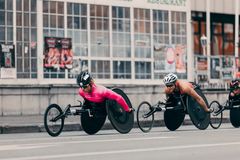
Masters athletes, para athletes and athletes from a range of ethnic backgrounds are similarly underrepresented in the underlying literature. Para sport in particular involves physiological considerations that general findings do not address, including thermoregulation and cardiovascular response. Applying general guidance to these populations without adjustment risks conclusions that do not hold for the athlete in front of you.
This is an argument for individual clinical judgement rather than for abandoning evidence that remains useful where it applies. It is also an argument for practitioners stating plainly when guidance rests on populations that do not resemble the athlete being advised.
What is changing
Funding bodies and journals have begun requiring that studies report the composition of their samples and justify exclusions. Sports organisations have invested in research programmes focused specifically on populations that were previously overlooked.
Progress is slow because building an evidence base takes years and the existing gap is substantial. In the meantime, the honest position is to describe what is known, name what is not, and defer individual questions to clinicians.
- Findings were generalised from narrow samples
- Physiological differences affect several conclusions
- The gap is being narrowed slowly
Also by Michael Johnson
- Relative age effects and how birthdays distort talent identificationYouth Development
- What progressive overload means once an athlete is already strongStrength Training
- Court speed, footwork and the very short warning an ankle receivesWimbledon
- How performance staff decide which numbers are worth acting onTop