Nutrition & Diet
Sweat, thirst and why hydration guidance keeps being revised
Advice on drinking during sport has swung between extremes within a single generation. The underlying physiology has not changed, which suggests the problem was always in the generalisation.
What sweating actually costs
Sweat is drawn from the body's fluid compartments, and sustained sweating reduces the volume of plasma circulating in the blood. Reduced plasma volume means the heart must work harder to deliver the same amount of blood to muscle and skin. Sweat also carries dissolved minerals, principally sodium, and the concentration of those minerals varies substantially between individuals.
Two athletes exercising side by side in identical conditions can lose markedly different amounts of both fluid and sodium. This variation is the reason population-level recommendations have consistently struggled to be useful for individuals.
How the advice swung
An earlier era emphasised drinking as much as possible, on the reasoning that any fluid deficit impaired performance. That guidance contributed to cases of athletes drinking to excess, which dilutes blood sodium and can become dangerous. The correction swung towards drinking to thirst, which suits many situations and is less appropriate in some extreme ones.
The current position is closer to individualisation, which is less quotable and considerably more defensible. Commercial interests were entangled with the earlier advice, which is one reason the correction took as long as it did.
Thirst as a signal
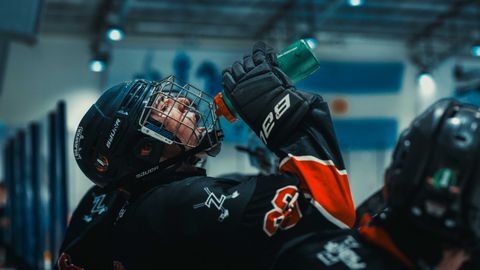
Thirst is generated by receptors responding to the concentration of the blood and to changes in circulating volume. It is a genuine physiological signal, though it typically arrives after a deficit has already begun to accumulate. During short or moderate activity that lag is unimportant, since the deficit does not reach a level that affects anything.
During prolonged work in the heat the lag becomes more relevant, which is why planned intake is used in endurance events. Thirst is also blunted by competition arousal and by cold conditions, both of which reduce how reliably the signal arrives.
The risk of drinking too much
Consuming fluid faster than the kidneys can excrete it dilutes blood sodium, a condition that can become a medical emergency. It has been described in endurance events, particularly among slower participants who drink at every opportunity available. The early symptoms overlap with those of dehydration, which makes the distinction difficult for a non-clinician to make.
Anyone becoming confused, nauseated or unwell during prolonged exercise needs medical assessment rather than more fluid. This overlap is one of the clearest arguments for having qualified medical provision at endurance events.
Measuring status is harder than it looks
Body mass change across a session is used as a practical estimate of fluid loss, though it captures other changes as well. Urine colour is a rough indicator that is influenced by supplements, food and the time since the previous drink. Blood measures are more accurate and are not practical outside a laboratory or a well equipped medical setting.
This is why individual sweat testing exists as a service delivered by practitioners rather than as something estimated at home. Even a good estimate describes one session in one set of conditions rather than a fixed property of the athlete.
Where this leaves an athlete
The useful general statements are that individual variation is large and that both extremes of intake carry genuine risk. Anything more specific depends on the individual, the environment, the duration and the sport being performed.
A sports dietitian or physician can assess an individual's sweat characteristics and build a plan around them. General guidance can explain the mechanism honestly while declining to supply a number that would not apply to most readers.
- Sweat rates vary enormously between individuals
- Drinking too much carries its own risk
- Thirst is a lagging but real signal
Also by Aarav Sharma
- Growth spurts and why coordination temporarily moves backwardsYouth Development
- Concussion in sport and why the brain resists a fixed timetableSports Medicine
- Five sets in the sun: thermoregulation across very long tennis matchesWimbledon
- Why the same injury ends one career and barely interrupts anotherTop