ICC
The fast bowler's lumbar spine and the loads it never entirely escapes
Fast bowling asks the lower back to do something no other sporting action requires. The mechanism is well understood, which is why the injury pattern has proved so stubborn.
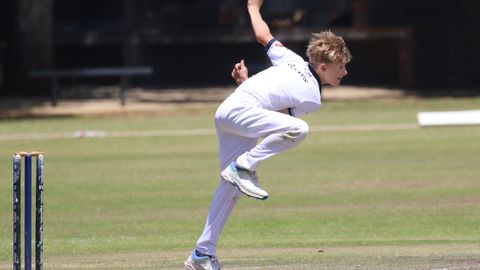
The action itself is the mechanism
Fast bowling combines a long run-up, a violent braking action at front foot contact and a rapid rotation of the trunk over a fixed base. Front foot impact transmits several times body weight through the leg and into the pelvis within a few hundredths of a second.
The trunk then extends, side-flexes and rotates almost simultaneously, which loads the small bony structures at the back of the spine. Those structures are not designed to be the primary load path, which is why they become the site where problems accumulate.
Mixed actions and counter-rotation
Bowling actions are commonly described by the relationship between the alignment of the shoulders and the hips through delivery. Actions where the shoulders rotate substantially relative to the hips place greater asymmetric demand on one side of the lower spine. This pattern has long been associated with the injuries seen in fast bowlers, and coaching has adapted accordingly.
Technique change is nonetheless slow and cannot be imposed quickly, because the action is built from years of repetition. Any assessment of an individual bowler's action and its consequences belongs with a coach and clinician working together.
Bone reads the pattern, not the day
Bone remodels continuously in response to the loads placed on it, removing material in some places and adding it in others. That process runs on a timescale of months, so a bowler's spine reflects the loading pattern of a season rather than a week. Problems in bone typically emerge when loading increases faster than the remodelling process can strengthen the region.
This is the mechanism behind the familiar clustering of bowling injuries after periods of rapid workload increase. It also explains why a bowler returning from a long break faces elevated risk even when they feel entirely well prepared.
Why the adolescent bowler is different
In a growing athlete, parts of the spine are still developing and the tissue properties differ from those of a mature skeleton. Growth also changes limb lengths and body proportions, which alters the mechanics of an action a young bowler has already learned.
Bowling loads for young players are managed through published guidance in most cricketing nations for exactly this reason. Decisions about how much a particular young bowler should bowl belong with qualified coaches and the child's clinician rather than anyone else.
Counting deliveries is harder than it sounds
Workload monitoring in cricket usually counts deliveries bowled, which is a reasonable proxy but an incomplete one. Intensity varies enormously between a net session at moderate pace and a spell of genuine fast bowling in a match.
Deliveries bowled in practice are frequently recorded less carefully than those bowled in competition, which understates true load. The most useful monitoring systems capture both the count and some measure of how hard those deliveries were bowled.
Why the problem persists
The loads that create risk are the same loads that generate pace, so reducing one reduces the other in direct proportion. Preparation aims to raise the tolerance of the tissue rather than to remove a demand that defines the discipline.
Rotation policies exist because the alternative is concentrating an enormous load on a small number of bowlers. Persistent lower back pain in any bowler is a reason for assessment rather than for bowling through, given what the pattern usually indicates.
- Counter-rotation concentrates load on one side
- Bone responds to loading patterns across months
- Adolescent bowlers face a distinct risk profile