Sports Medicine
Screening tests promise prediction and usually deliver description
Pre-season screening has become routine across professional sport, yet the tests rarely identify who will get injured. Understanding why explains what screening is genuinely useful for.

What screening was supposed to do
The original promise was straightforward: measure a set of physical qualities before a season and identify the athletes most likely to break down. Batteries of movement tests, strength measurements and range assessments were assembled on that basis and adopted widely across professional sport. The appeal was obvious, since a test that flagged risk in advance would convert an unpredictable cost into a manageable one.
What emerged instead was a body of work showing that these tests describe an athlete accurately while predicting individual injuries poorly. That gap between description and prediction is not a flaw in any particular test but a consequence of how the underlying statistics behave.
Why group findings do not transfer to a person
A finding that a group scoring below some threshold has more injuries than a group scoring above it is a statement about averages. Applying that statement to an individual requires the test to separate the two groups cleanly, which in practice it almost never does.
The distributions overlap heavily, so most athletes below the threshold will be fine and a substantial number above it will not be. A coach acting on an individual result is therefore making a decision on information that barely shifts the odds for that person.
Rare events resist prediction
Serious injuries are uncommon relative to the number of athletes tested, and rare outcomes are mathematically hard to predict. Even a test with impressive accuracy in a laboratory generates mostly false alarms when applied to a population where the event is rare.
Those false alarms carry real costs, including unnecessary restriction, anxiety and the erosion of trust in the testing programme itself. This is a general property of screening rather than something specific to sport, and it is well recognised in clinical medicine.
Injury is a chain, not a state
An injury requires a susceptible tissue to meet a sufficient load in a particular movement at a particular moment. Screening captures the state of the athlete at one point in time and says nothing about the loads or moments still to come.
Fatigue, opposition, surface, weather and simple chance all sit between the test result and the outcome it is asked to predict. Because those factors dominate, a test conducted weeks earlier cannot carry much predictive weight regardless of how well it is performed.
What screening is genuinely good for
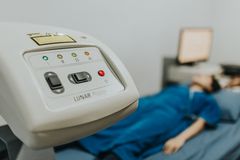
The most defensible use is establishing a baseline, so that a change in an athlete's own measurements can be recognised later. Comparing a player after an injury against their own pre-season values is far more informative than comparing them against a population norm.
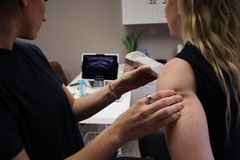
Screening also surfaces existing problems that an athlete has not reported, which is a description task rather than a prediction one. Framed this way, the process retains clear value while making no claim the underlying evidence cannot support.
How to read a screening claim
Any product or programme offering an individual injury risk score is claiming a level of prediction the field has not demonstrated. The honest version of the claim is that a measurement has changed and therefore deserves a closer look by a clinician.
Decisions about an individual athlete's availability rest on clinical examination and history rather than on a battery of scores. Screening supports that judgement without replacing it, and programmes that understand this get more from it than those that do not.
- Group associations do not transfer to individuals
- Rare events are intrinsically hard to predict
- Screening works best as a baseline record