Injury Recovery
Why strength returns before confidence after a knee reconstruction
Rehabilitation after a serious knee injury restores measurable capacity long before it restores willingness to use it. That gap is a physical phenomenon rather than a psychological footnote.
Two recoveries running at different speeds
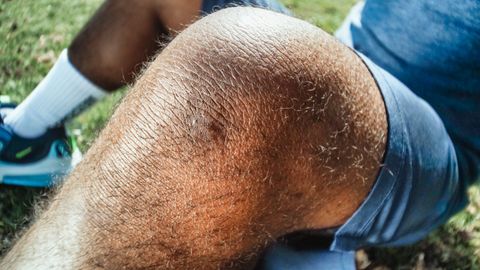
A reconstructed knee can produce strength and stability that satisfy every physical criterion while the athlete still moves cautiously. That caution is not imagination; it appears in the mechanics as reduced loading of the injured side during landing and cutting. Athletes frequently describe the knee as feeling different rather than painful, which is difficult to capture in any standard test.
The result is an athlete who passes physical testing and performs unlike themselves in the competitive environment. Recognising this as a distinct component of recovery rather than a character issue is one of the shifts in modern practice.
What fear does to movement
Anticipating pain or failure changes how the nervous system organises movement, generally towards stiffer and more protective strategies. That protection shifts load away from the injured limb and onto the other side, which is measurable in force plate testing. Over time the uninjured limb absorbs more work than it was previously accustomed to, which has its own consequences.
The altered pattern also reduces performance directly, since protective movement is slower and less efficient than the original. Because the change is largely unconscious, an athlete can insist they feel fine while the measurements show a clearly guarded limb.
Why symmetry testing is not enough
Comparing the injured limb against the uninjured one is standard practice and rests on an assumption that deserves scrutiny. The uninjured limb also loses capacity during a long rehabilitation, so symmetry can be achieved by both sides being below baseline. Comparison against the athlete's own pre-injury values, where those exist, gives a considerably more honest picture.
This is one of the practical arguments for the baseline testing that pre-season screening programmes can provide. Testing under fatigue rather than in a rested state also reveals differences that a single fresh measurement can easily conceal.
Readiness can be assessed rather than guessed
Validated questionnaires exist that assess an athlete's confidence in the injured region and their concern about a further injury. These measures correlate with return to sport outcomes well enough to be used alongside physical criteria in decision making.
Their value is partly in making the conversation explicit, since athletes rarely volunteer that they do not trust the knee. Interpretation of these tools sits with the clinical team, who combine them with examination and functional testing.
The environment shapes the timeline
Athletes returning into a supportive setting where a graded reintroduction is respected tend to describe a smoother process. Where selection pressure or contract insecurity is present, athletes report readiness they do not feel, which removes the information staff need. The quality of communication between medical staff, coaches and the athlete is therefore a genuine variable in the outcome.
This is why return decisions in well run programmes involve several people rather than resting on any single test result. It also explains why the same athlete can progress very differently at two clubs with identical medical resources available.
What this means for expectations
The full picture of recovery after a major knee injury includes a period where the athlete is physically capable and not yet themselves. Expecting that period and planning for it is more useful than treating it as an unexpected complication when it arrives.
Psychological support during rehabilitation addresses something with direct mechanical consequences rather than something peripheral. Any athlete navigating this should be doing so with a physiotherapist and, where appropriate, a psychologist experienced in sport.
- Fear of reinjury changes movement mechanics
- Limb symmetry alone is an incomplete criterion
- Psychological readiness is measurable
Also by Rohan Desai
- Altitude camps: what the blood does and what it does not guaranteeOlympic Science
- Tendons adapt more slowly than muscle, and programmes rarely respect itStrength Training
- Batting reaction time is not eyesight, and the difference mattersICC
- Long-haul travel, body clocks and the international football calendarFIFA